Showing posts with label human rights. Show all posts

Monday, 12 December 2016

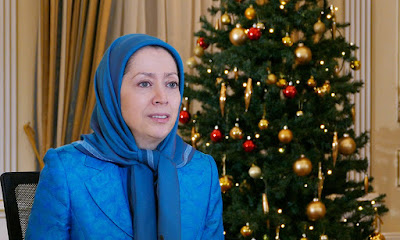
Message of Maryam Rajavi to the Conference at the US Senate

Washington, D.C. - In a briefing held at the Senate Kennedy Caucus Room, senior senators and former national security officials condemned the flagrant violations of human rights in Iran and the clerical regime's meddling in the region.
They stressed on the need to adopt a firm policy on the religious dictatorship ruling Iran.
During Rouhani’s so-called “moderate” presidency, more than 2,600 people have been executed.
According to the United Nations, this marks the largest number of executions in the past 25 years.
In order to create an atmosphere of repression and fear in society, the clerical regime has been executing a large number of victims, in public places.
At least 70 women have been hanged during Rouhani’s term.
Despite a decline in sanctions and transferring a considerable amount of cash to the mullahs’ pocket, the Iranian economy is suffering from recession. 
Maryam Rajavi
Maryam Rajavi

Tuesday, 28 June 2016

Canada’s James Bezan MP stands in solidarity with people of Iran

James Bezan MP
James Bezan MP
Ottawa, 28 Jun - The “Free Iran gathering in Paris on 9 July has the support of Canadian Member of Parliament James Bezan. He has expressed his solidarity in a message for an Iran that is free and democratic and respects liberty and human rights.
His message is for proponents of the People’s Mojahedin Organization of Iran (PMOI or MEK) and the National Council of Resistance of Iran (NCRI). He criticizes continued human rights offensives that violate international law standards by the regime of President Rouhani and Ayatollah Khamenei. 
He also encourages continued solidarity to resist Iran’s persistent oppression of political activists, preventing freedom of religion, the regime’s meddling in Syria, Iraq, and Yemen by undercutting UN efforts to achieve peace in addition to coalition allies battling ISIS, and the continued barbarities by the Assad government in Syria.

Wednesday, 13 April 2016

IRAN: Exclusive: Women in Iran face dual discriminations

 
#Iran Exclusive: #women in Iran face dual discriminations

#Iran Exclusive: #women in Iran face dual discriminations
Women in Iran carry the burden of a dual discrimination. Both the judicial system in the country and the strict interpretation of Sharia laws by the fundamentalist mullahs have been combined to ignore the basic human rights of women in the Islamic Republic of Iran. Not only the discrimination against women in Iran is legalized, but also institutionalized. Although one could argue that women’s rights are violated in many countries, and that women are suppressed in many Muslim countries under the “sharia law”, but Iran remains unique as its crackdown is embedded in the constitution, and civil and administrative laws.

Monday, 11 April 2016

IRAN:Letter of protest by Iranian political prisoner Reza Akbari Monfared to Italy’s PM


Letter of protest by Iranian political prisoner Reza Akbari Monfared to Italy’s PM
NCRI – The following is the English translation of a letter of protest by Iranian political prisoner Reza Akbari Monfared to the Prime Minister of Italy over his planned trip to Iran.
Mr. Akbari Monfared has written the letter from Iran’s notorious Gohardasht Prison in Karaj, north-west of Tehran, to Prime Minister Matteo Renzi reiterating that the Italian Premier’s trip to Tehran on Tuesday would only embolden the mullahs’ regime to commit more crimes.

EU imposes sanctions on Iran regime over human rights abuses

EU imposes sanctions on Iran regime over human rights abuses
NCRI - The European Union on Monday extended sanctions against 82 officials of the Iranian regime until 2017 over "serious human rights violations" in the country.
The 28-nation bloc has frozen assets and placed travel bans against the Iranian officials since 2011 because of the human rights violations in Iran. It has renewed the sanctions every year since.

Saturday, 9 April 2016

NCRI calls on Italian PM to cancel trip to Iran - The National

NCRI calls on Italian PM to cancel trip to Iran - The National
The Iranian Resistance has called on Italy's prime minister to cancel a visit to Iran next week amid fears it will be used by Tehran to legitimize human rights violations in the country, Scotland's The National reported on Friday.
"Iran has an economy worth $400 billion (£283.8bn) and European countries are keen to re-establish trade ties," the paper wrote.
"However, the National Council of Resistance of Iran (NCRI) said more than 2,300 people had been executed there during [Hassan] Rouhani’s regime – according to a UN special rapporteur, the highest figure over the past 25 years."
"The NCRI said the Tehran regime 'manipulates such visits against the highest interests of the people of Iran and against peace and tranquillity in the region'."
Shahin Gobadi of the NCRI told The National: “The Iranian regime is very egregious and only feeds Tehran’s propaganda. It has no interest in improving Iran’s conduct at home or abroad."
“Actions talk louder than words and under Rouhani the human rights situation is becoming much worse. Just yesterday a report by Amnesty International put Iran far ahead of any other country in terms of executions in 2015.”
Look at Iran’s conduct regarding missile tests, or for sending weapons abroad. In recent weeks three ships containing Iranian weapons destined for Yemen’s Houthis were intercepted by the French, Australian and American naval forces in international waters.”
Mr. Gobadi said it was unlikely that Italy would condemn human rights issues in a meeting with Rouhani, in which case the premier’s visit should be called off, the report said. If it went ahead as planned, it would send a message to Iranians that such behaviour was acceptable.

IRAN:Excerpts of Amnesty International's 2015/2016 report on violation of human rights in Iran:

Womenremained subject to discrimination under the law, particularly criminal and family law, and in practice.
Women and girls also faced new challenges to their sexual and reproductive health and rights. Parliament debated several draft laws that would further erode women’s rights, including the Bill to Increase Fertility Rates.

Thursday, 10 March 2016

Executions in Iran hit 20-year high in 2015 - UN investigator

Ahmed Shaheed
Ahmed Shaheed
Iran's regime executed nearly 1,000 prisoners last year, the highest number in two decades, the United Nations special rapporteur on human rights in Iran said on Thursday.
AhmedShaheed told a news briefing in Geneva that he is particularly concerned by executions for crimes committed by children under 18. This was "strictly and unequivocally prohibited under international law," he said.
There had been a "staggering surge in the execution of at least 966 prisoners last year - the highest rate in over two decades", Shaheed said.

Monday, 22 February 2016

Women's News Iran: 74 lashes, three months jail for mother of political prisoner and human rights activists

Iran: 74 lashes, three months jail for mother of political prisoner and human rights activists
18 human rights activists including families of political prisoners and martyrs were sentenced each to 91 days imprisonment and 74 lashes.
They had participated in a peaceful gathering outside Tehran's Evin Prison on November 21, 2015, demanding abolition of death sentence for prisoner of conscience Mohammad Ali Taheri, and freedom of all political prisoners.

The 18 convicted activists included Mrs. Simin Aiyvazzadeh (mother of political prisoner Omid Ali-Shenas), Azam Najafi, Parvin Soleimani, Sara Sa'ee, Farideh Toosi and Zahra Modarres Zadeh. They were charged with "illegal gathering disrupting public order."

Tuesday, 16 February 2016

European parliamentarians quizzed Zarif about human rights violations in Iran

Zarif
Zarif
EU-Iran relations should not improve at the expense of human rights, members of Foreign Affairs Committee of the European Parliament said in Tuesday’s debate with the Iranian regime’s Foreign Minister Mohammad Javad Zarif.
In his first-ever visit to the European Parliament’s Foreign Affairs Committee, members told him “the human rights situation in Iran, the death penalty, public executions and the prosecution of bloggers and journalists are unacceptable and will serve as a litmus test for future relations,” according to a report published on the Parliament’s website.
Reuters reported: “European parliamentarians quizzed Zarif about alleged human rights violations in Iran, Iranian defense spending and nuclear activity and Tehran's stance on Middle East conflicts that have killed hundreds of thousands of people and driven millions from their homes, spurring a large influx of refugees into Europe.”

Friday, 12 February 2016

NCRI Iran News - Iran Resistance

Mrs. Maryam Rajavi, President-elect of the Iranian Resistance, - Rt. Hon. David Jones MP
British parliamentarians present Ms.Rajavi a declaration on adoption of a decisive Iran policy
People of  Iran have never surrendered. They R determined 2 turn this dark page&build their future.
More than 200 cross-Party MPs and Peers today called on the UK government to adopt a firm policy towards Iran and make any improvement in bilateral relations conditioned on an end to human rights abuses and regional meddling. The announcement was unveiled at a meeting attended by a delegation of eight MPs and one member of the House of Lords with Mrs. Maryam Rajavi, President-elect of the Iranian Resistance, north of Paris at the headquarters of the National Council of Resistance of Iran (NCRI).
The meeting on Friday and the policy recommendations come as Iran’s regime has faced scrutiny by United Nations bodies over its abysmal human rights record and exactly two weeks before Iran's Parliamentary and Assembly of Experts sham elections, whose candidates are strictly filtered and unrepresentative of the people’s desires.
Iran has the highest per capita execution rate in the world. Political suppression has intensified over the past two years under the presidency of Hassan Rouhani. Iran continues with its destructive meddling in Syria, Iraq and Yemen.

Friday, 5 February 2016

Iran - Iranian regime faces crisis in recruiting Afghans to fight in Syria

February 2015 photo of Qassem Soleimani (Left), commander  of Quds Force with Afghan commanders killed in Syria
February 2015 photo of Qassem Soleimani (Left), commander
 of Quds Force with Afghan commanders killed in Syria
The Iranian regime has dispatched thousands of foreign mercenaries including Afghan refugees to fight in Syria and prop up the embattled regime of Bashar al-Assad, according to sources of the main Iranian opposition group, the People’s Mojahedin Organization of Iran (PMOI/MEK).
Incapable of mobilizing and dispatching necessary troops from Iran to the conflict and apprehensive of a backlash within its forces due to rising IRGC casualties, the regime has resorted to mobilizing the mercenaries using various tactics including threating them with execution.
n recent years, particularly Afghan refugees living in Iran have been tapped for this purpose. The Iranian regime has threatened the refugees with deportation from Iran, imprisonment or even execution (all serious violations of human rights) to dispatch the Afghan refugees to Syria.

Wednesday, 13 January 2016

Iran - Waiting to die: the Iranian child inmates facing execution All of

Waiting to die
Waiting to die

them have written Iran’s history of human rights in their blood; the eternal 
word they have written is freedom, a cause that will succeed with the Iranian people’s resistance.
Of course, it’s been a long time since the mullahs have embedded repression in the lives of Iranians as a permanent factor.
They have not abandoned gouging of eyes and amputation of limbs, and executions are repeated every few hours.
Our compatriots, however, have not surrendered to this barbarism. They have never accepted violation of their rights and removal of their freedoms.
The mullahs’ brutality in violating our people’s rights is because they want to hold on to power.
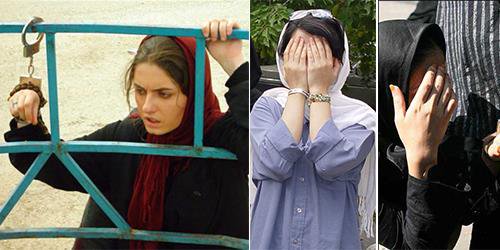
In Iran, girls are held criminally accountable by law from the age of nine, and can be sentenced to death by hanging for crimes such as murder,
drug trafficking and armed robbery. Sadegh Souri has photographed girls in the harsh conditions of juvenile detention – many of whom are marking time until they turn 18, when their executions will be carried out
Mahsa is 17. She fell in love with a boy and intended to marry him, but her father was against the marriage. One day she had an argument with her father, got angry, and killed him with a kitchen knife. Mahsa’s brothers are requesting the death penalty for her

Thursday, 7 January 2016

Interview with Tahar Boumedra: Iran regime is not reformable

Dr. Boumedra appealed
The former head of the United Nations human rights office in Iraq, Dr. TaharBoumedra, on Wednesday rejected claims that the Iranian regime’s president Hassan Rouhani is a moderate and said that Iran’s fundamentalist regime is “not reformable.”
In an interview with ncr-iran.org, Dr. Boumedra appealed to European leaders to focus on the appalling human rights situation in Iran in light of Rouhani’s planned trip to France and other European countries at the end of January.
Moderation under the current Iranian constitution is meaningless because it is a constitution program that adopts violations of human rights, including torture, and the ‘export of the revolution’ as a means of governance in Iran,” Dr. Boumedra said.
It is impossible to qualify a member of the current Iranian government as a moderate,” added Dr. Boumedra, who last September published a 50-page report on the human rights situation in Iran in 2015.
He pointed out that Rouhani and all the members of his administration are “committed to a regime with a constitution that is based on Sharia [Law] as interpreted by a group of mullahs under the leadership of the Supreme Leader. This interpretation is not the mainstream Shia or Sunni Islam. It is an interpretation that does not belong to this era.”

Wednesday, 23 December 2015

Iran: New case filed against Nargess Mohammadi


political prisoner Nargess Mohammadi
Prison guards who transferred political prisoner Nargess Mohammadi to hospital for treatment have filed a complaint against her, arousing her protest.
Ms. Mohammadi, Vice President of the League of Human Rights Advocates in Iran, wrote an open letter in November to Tehran’s Prosecutor upon return from hospital and complained about the way she had been treated by her guards. She said they chained her to the bed and did not leave the room when she had to take off her clothes for medical examination or surgery. Finally, she refused to go to the operation room after her guard refused to leave the operation room and returned to prison without final diagnosis of her illness.
The new complaint may be related to verbal exchanges between Ms. Mohammadi and her guards in such tense situations at the hospital.
In another development, it was reported prison guards prevented her relatives from giving Ms. Mohammadi the pictures of her twins who have been sent abroad and she has not been in contact with since June. In response to her request to her inquiry, prison guards answered, “We have been instructed to deal with you in this manner.

Friday, 18 December 2015

UN General Assembly adopts 62nd resolution censuring rights abuses in Iran

UN_General_Assembly
MaryamRajavi: Ruling mullahs who have been condemned 62 times by the UN should be brought to justice for crimes against humanity
On Thursday, December 17, 2015, the UN General Assembly adopted a resolution strongly condemning the brutal and systematic violation of human rights in Iran, in particular the mass and arbitrary executions, increasing violence and discrimination against women and ethnic and religious minorities. This is the 62nd UN resolution condemning rights abuses by the clerical regime.
Mrs. Maryam Rajavi, President-elect of the Iranian Resistance, welcomed the resolution and said: "Mounting violations of human rights in Iran and condemnations of the clerical regime by the highest international body for consecutive years through the past three decades vividly indicates that this regime has no place in the international community and should be rejected by the international community. The murderers of the Iranian people, whose bleak record includes the execution of 120,000 political prisoners and seven massacres in Camp Ashraf and Camp Liberty must be held accountable by the UN Security Council and be brought to justice for crimes against humanity. This is the only way to respect the vote of the majority of countries against human rights abuses in Iran over the past 30 years, especially in light of the fact that most of the current leaders of the regime have held key positions in the past 35 years and have taken part in crimes against humanity.”
"The misguided calculation that by resorting to silence in the face of human rights violations in Iran, the regime's nuclear projects and export of terrorism and fundamentalism could be contained is a dangerous mistake that stems from short-term economic interests and short-sighted political considerations. The clerical regime considers inaction in the face of its crimes against humanity as a green light to continue its tortures and killings and emboldens it in warmongering in Syria, Iraq and the entire region. It reassures the regime that the international community is not serious about confronting its efforts to obtain nuclear weapons," Mrs. Rajavi added.
The resolution expresses “serious concern at the alarming high frequency of, and increase in the carrying-out of the death penalty, in disregard of internationally recognized safeguards, ... and at the continuing imposition and carrying-out of the death penalty against minors and persons who at the time of their offence were under the age of 18” and calls on the Iranian regime “to abolish, in law and in practice, public executions… and executions carried out in violation of its international obligations” and “to ensure, in law and in practice, that no one is subjected to torture or other cruel, inhuman or degrading treatment or punishment.”
The resolution expresses serious concerns about “all forms of discrimination and other human rights violations against women and girls, violence against persons belonging to recognized and unrecognized religious minorities” and calls for the elimination “in law and in practice” of “all forms of discrimination and other human rights violations against persons belonging to ethnic, linguistic or other minorities.”
The resolution also calls upon the regime “to end widespread and serious restrictions… on the right to freedom of expression, opinion, association and peaceful assembly” and “to release persons arbitrarily detained.”
Secretariat of the National Council of Resistance of Iran

December 17, 2015

Tuesday, 15 December 2015

Maryam Rajavi meets and holds talks with Senator Joseph Lieberman

Maryam Rajavi meets and holds talks with Senator Joseph Lieberman
Auvers-sur-Oise- Maryam Rajavi and Senator Lieberman met on December 8, 2015, and discussed the latest developments in the region including the crisis in Syria, the Iranian regime’s destructive role as well as solutions to the current crisis.They also discussed the role of the Iranian Resistance in confronting Islamic fundamentalism in the region.
Maryam Rajavi enumerated the clerical regime's anti-human crimes in Iran and its systematic violations of human rights.
She stressed that the consequences of the medieval regime’s rule have not been limited to Iranian boundaries but the religious fascist regime is the heart of the octopus of terrorism and fundamentalism acting under the banner of Islam and acts as the epicenter of the crises in the region and the world.
Senator Lieberman noted Tehran’s role as the main parameter causing instability in the region. He described the regime as the prime threat to global peace and security and reiterated his view on the need for regime change by the Iranian people.He further stressed on MEK’s role in confronting Islamic fundamentalism by advocating a democratic and tolerant Islam.
Senator Lieberman expressed confidence that change in Iran will have a great impact on developments throughout the region.

Monday, 14 December 2015

The road to defeating ISIS runs through epicenter of Islamic extremism in Iran

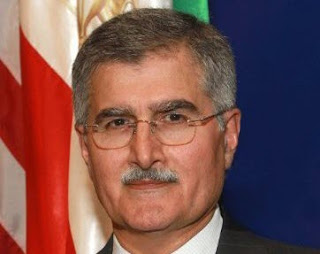
Ali-Safavi
Ali-Safavi

By Ali Safavi
Published December 14, 2015
FoxNews.com
The heinous terrorist attacks in San Bernardino 12 days ago and in Paris last month were clear reminders of the growing threat of Islamic extremism. This vicious ideology continues to take new physical forms - once Al Qaeda, now ISIS. Their goal is to create an Islamic "state" capable of enforcing Sharia law by force and unwinding humanity's democratic achievements.
While the Sunni variant of fundamentalism desperately seeks to achieve this objective, the Shiite version in Tehran is well on its way. It should be confronted, not engaged.
Hotspots like Syria, Iraq, and Yemen have become a breeding ground for ISIS. In all of them, Tehran's fundamentalist regime - the world's largest state sponsor terror  plays a key role in the mayhem.
The Iranian regime’s regional agenda is, in the words of its Supreme Leader, “diametrically opposed” to that of the U.S.
In fact, after the deadly Paris attacks, Tehran's officials and media quickly blamed France itself, with some suggesting that the French "deserved" these attacks because Paris supported ISIS against Syrian dictator Bashar Assad - a key Iranian ally.
Tehran is now trying to push a new narrative. For it, ISIS is a blessing in disguise because it conveniently justifies its destructive involvement in Syria and other countries. Now, the mullahs are attempting to convince western governments to join them in backing Assad. That is a dangerous proposition.
Yet in the aftermath of the nuclear deal, some in the West are optimistic about the theocracy being more open to political reforms. But the facts and the evidence do not support this perception. Instead of changing course in the region, Tehran is even more adamant that others should follow its destructive policies.
And if improved human rights are a sign of moderation, the situation in Iran has in fact worsened significantly under the supposedly “moderate” president Hassan Rouhani.
A new United Nations report says in the first nine months of this year, more than 690 people were executed in Iran, “likely putting the execution rate during the first half of 2015 at its highest in some 25 years.” This month, Tehran was censured for the 62nd time by the United Nations.
The U.N.’s special rapporteur Ahmed Shaheed made a chilling reminder that juveniles continue to be executed by the regime, and Amnesty International has called Iran one of the last remaining executioners of children in the world.
Women continue to be treated as second-class citizens. Last year, dozens of women had acid splashed on their faces because they were seen as violating the regime’s strict veiling laws.
Young girls are prevented from attending certain university courses like business management and English translation. And, the parliament (Majlis), under Rouhani, has passed a series of laws further marginalizing and disenfranchising half of the population.
Journalists, bloggers and opposition activists are routinely arrested by the regime. In one high-profile incident, a young blogger, Sattar Beheshti, was killed under torture.
According to the U.N. report, the regime continues to use a variety of torture methods, including the surgical removal of eyes and hand amputations - much like ISIS does in its "caliphate."
So much for moderation!
The Iranian regime is controlled by the Supreme Leader Ali Khamenei -- an equivalent of the "caliph" of the "caliphate." He makes all the final decisions that determine the strategic direction of the "Islamic" state. 
A few days after the nuclear deal was announced, Khamenei warned, “We will never stop supporting our friends in the region and the people of Palestine, Yemen, Syria, Iraq, Bahrain and Lebanon. Even after this deal our policy towards the arrogant U.S. will not change.”
Iran's medieval regime cannot be reformed because any sign of moderation would provide an opening for the emergence of popular demands, which would mature into protests for democracy.
Many leading observers agree that the real alternative to fundamentalism lies within the larger Iranian society, and not within the shrinking confines of a dying theocracy. Just as the curtain of communism finally fell in Eastern Europe by that region’s restive population, so can the curtain of fundamentalism in Iran.
Unless and until the U.S. government looks to solve the Iranian problem by falling back on the problem itself – the regime in Tehran – it will fail to instigate genuine change. It should start by challenging Tehran’s involvement in Syria and working to remove Assad from power as quickly as possible. That is the real solution to the growing threat of ISIS.
Ultimately, the answer to Islamic fundamentalism lies in the hands of the Iranian people and Iran’s organized opposition, which is led by a Muslim woman, Maryam Rajavi. The removal of the epicenter of fundamentalism in Iran will ensure that the world is free of the vile threat of extremism for good.
Ali Safavi is a member of the Foreign Affairs Committee of the National Council of Resistance of Iran, which seeks the establishment of a democratic, secular and non-nuclear Iran.