Showing posts with label mullahs. Show all posts

Monday, 12 December 2016

Message of Maryam Rajavi to the Conference at the US Senate

Washington, D.C. - In a briefing held at the Senate Kennedy Caucus Room, senior senators and former national security officials condemned the flagrant violations of human rights in Iran and the clerical regime's meddling in the region.
They stressed on the need to adopt a firm policy on the religious dictatorship ruling Iran.
During Rouhani’s so-called “moderate” presidency, more than 2,600 people have been executed.
According to the United Nations, this marks the largest number of executions in the past 25 years.
In order to create an atmosphere of repression and fear in society, the clerical regime has been executing a large number of victims, in public places.
At least 70 women have been hanged during Rouhani’s term.
Despite a decline in sanctions and transferring a considerable amount of cash to the mullahs’ pocket, the Iranian economy is suffering from recession. 
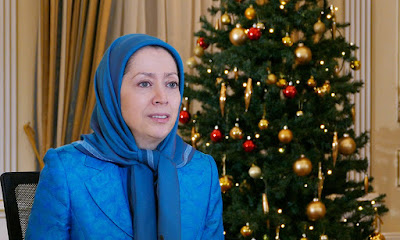
Maryam Rajavi
Maryam Rajavi

Monday, 18 April 2016

IRAN:How hypocritical the trip to Tehran is from the perspective of a dissident

How hypocritical the trip to Tehran is from the perspective of a dissident
The parade of Western leaders, with their shared weaknesses.
The young Zanjani speaks: “The mullahs haven’t changed
Il Foglio - April 14, 2016
By Cynthia Martens
Paris. Elham Zanjani has never been to Iran. Her parents left their home country in the 70s, and she was born in Montreal in 1978 and raised in Toronto. Though Zanjani speaks fondly of Canada, as a young girl she was troubled by the knowledge that far away, cousins whom she had never met were living a totally different sort of life.
You always have in the back of your mind,” she says in an interview with Il Foglio. “How is it possible that I could grow up in a place where I could do sports, I could swim, I could think freely, go to the mall, listen to music, eat what I want and start building the future that I want – but my cousins, the same age as I was, didn’t have the same rights,” she says, noting that the girls had to wear full black chadors. Contact with loved ones in Iran was limited, due to the regime’s aggressive monitoring of phone calls.
The scar of Camp Ashraf
Zanjani’s concern for her relatives eventually blossomed into a desire to work with the Iranian resistance. As a college student in Canada, she was interested in physiotherapy, but instead of finishing her studies, left everything for Camp Ashraf, a city in Iraq near the border with Iran that was home to many political refugees and former prisoners of the Iranian regime. Though she initially expected her stay to be brief, Zanjani stayed for well over a decade, working at the local hospital and putting her language skills – in addition to English, she speaks French, Farsi and a bit of Arabic – to use as an interpreter.
I got to improve my Farsi, and got to really understand my background much more,” she recalls.
A relatively peaceful life in Ashraf took a turn for the worse after U.S. troops pulled out of Iraq, and residents of the camp experienced several attacks from Iraqi forces guided by a prime minister, al-Maliki, who was sympathetic to the Iranian regime. Zanjani was directly hit by a grenade. Getting proper care for her extensive arm and leg injuries was complicated, and Zanjani eventually returned to Canada, where she recovered.


Wednesday, 13 April 2016

IRAN: Exclusive: Women in Iran face dual discriminations

 
#Iran Exclusive: #women in Iran face dual discriminations

#Iran Exclusive: #women in Iran face dual discriminations
Women in Iran carry the burden of a dual discrimination. Both the judicial system in the country and the strict interpretation of Sharia laws by the fundamentalist mullahs have been combined to ignore the basic human rights of women in the Islamic Republic of Iran. Not only the discrimination against women in Iran is legalized, but also institutionalized. Although one could argue that women’s rights are violated in many countries, and that women are suppressed in many Muslim countries under the “sharia law”, but Iran remains unique as its crackdown is embedded in the constitution, and civil and administrative laws.

Monday, 4 April 2016

Iran:Persian New Year celebration with residents of Val d'Oise and French supporters of the Iranian Resistance

Maryam-Rajavi-Iran-New-Year
MaryamRajavi: Nowruz strengthens solidarity among people, by overcoming differences and improving friendship, therefore the mullahs are strongly against it
Auvers-sur-Oise, April 3, 2016 – The Persian New Year was celebrated with a number of residents of Val d'Oise and French supporters of the Iranian Resistance at the headquarters of the National Council of Resistance of Iran (NCRI).
Maryam Rajavi welcomed the Auvers-sur-Oise neighbors and supporters from nearby towns.
She elaborated on the philosophy of Nowruz as well as the situation in Iran today and pointed out: The philosophy of these feasts is to strengthen solidarity among people, by overcoming differences and improving friendship.
No wonder that the mullahs are so strongly against Nowruz. They made tremendous effort during their rule to ban Nowruz celebrations, to no avail. Under the mullahs, the Iranian people have celebrated Nowruz more enthusiastically than ever before to show that their culture is greater than what the mullahs advocate. They have thus expressed their hope for change of the mullahs' regime.
In her appraisal of the events of the past Iranian year, the Iranian Resistance's President-elect noted: Our compatriots staged over 6500 large and small demonstrations and protests. Teachers called off school and staged demonstrations in cities all across the country. Workers held numerous demonstrations.
Political prisoners repeatedly went on hunger strike. Families of martyrs and political prisoners held rallies and gatherings outside prisons. Nurses, students, government employees and farmers also held protests on many occasions.
With nearly 1,000 executions over the past year, the total number of executions under Rouhani amounts to 2300, despite his claims to moderation.

Wednesday, 30 March 2016

Iran - Women: Sholeh Pakravan denounce juvenile execution

“Don’t, don’t, don’t execute Heiman Oraminejad
Sholeh Pakravan, mother of Reyhaneh Jabbari, young indoor decorator who was executed for self-defending against an intelligence agent,
addressed the mullahs’ head of judiciary in a letter after a death sentence was approved against a young man called Heiman Oraminejad. The letters reads in part:
“Don’t, don’t, don’t execute Heiman Oraminejad. Execution of under-age people supposed to be stopped.

Wednesday, 17 February 2016

Iran: Maryam Rajavi: Terrorism under the banner of Islam owes its existence to Iran regime

Maryam Rajavi, President-elect of the National Council of Resistance of Iran

A conference was held on Friday February 12 in Paris with prominent members of UK parliament participating.
 In her speech, Mrs. Maryam Rajavi, President-elect of the National Council of Resistance of Iran (NCRI), said that so long as the mullahs are in power in Iran, terrorism under the banner of Islam will continue to owe its existence to the regime.

Tuesday, 2 February 2016

Trip by mullahs’ foreign minister to London and participation in Syria conference will only intensify the Syrian crisis

National Council of Resistance of Iran
The Iranian Resistance strongly condemns the trip by the foreign minister of the religious fascism ruling Iran to the UK and his participation in the Syria Donors Conference scheduled for February 4. The Iranian Resistance calls for cancelation of Zarif’s invitation and participation in the conference.
The clerical regime ruling Iran and its crimes in Syria are the primary problem in that country and throughout the Middle East. Seeking the engagement of the Iranian regime in solving the Syrian crisis is as legitimate and as rational as asking an 'arsonist to put out the fire'.
The clerical regime has been the main reason for Bashar Assad’s survival and continuation of the massacre of the Syrian people. It has dispatched more than 5000 commanders and rank and file of the IRGC and tens of thousands of its foreign mercenaries including those from Iraq, Lebanon, Afghanistan, and Pakistan, and it has provided complete logistical and military support to Assad's regime. The Iranian regime has spent tens of billions of dollars of the Iranian people’s wealth in order to maintain Assad in power. The most senior officials of the clerical regime have reiterated on numerous occasions that without their direct and full-fledged support, the Assad regime would have been overthrown on a number of occasions. The Iranian regime’s officials have explicitly described Syria as one of “Iran's provinces” that has to be fought for vigorously. The downfall of Bashar Assad would be a devastating blow to the clerical regime. Hassan Rouhani, the Iranian regime’s president, during his European tour last week, once again reiterated the need to support Assad.

Wednesday, 13 January 2016

Iran - Waiting to die: the Iranian child inmates facing execution All of

Waiting to die
Waiting to die

them have written Iran’s history of human rights in their blood; the eternal 
word they have written is freedom, a cause that will succeed with the Iranian people’s resistance.
Of course, it’s been a long time since the mullahs have embedded repression in the lives of Iranians as a permanent factor.
They have not abandoned gouging of eyes and amputation of limbs, and executions are repeated every few hours.
Our compatriots, however, have not surrendered to this barbarism. They have never accepted violation of their rights and removal of their freedoms.
The mullahs’ brutality in violating our people’s rights is because they want to hold on to power.
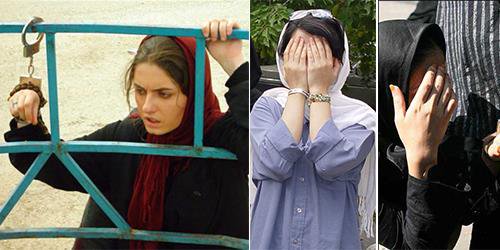
In Iran, girls are held criminally accountable by law from the age of nine, and can be sentenced to death by hanging for crimes such as murder,
drug trafficking and armed robbery. Sadegh Souri has photographed girls in the harsh conditions of juvenile detention – many of whom are marking time until they turn 18, when their executions will be carried out
Mahsa is 17. She fell in love with a boy and intended to marry him, but her father was against the marriage. One day she had an argument with her father, got angry, and killed him with a kitchen knife. Mahsa’s brothers are requesting the death penalty for her

Thursday, 31 December 2015

Iran a major prison for journalists - RSF

RSF-logo
RSF-logo
Iran is the world's third biggest prison for journalists, the press freedoms group Reporters Without Borders (RSF) said in a report published on Tuesday.
At least 18 journalists are confirmed to be in detention in Iran, RSF said in its annual "Round-up of journalists killed worldwide 2015."
Earlier this month RSF published a separate annual Round-up of journalists detained, held hostage or disappeared in 2015," in which it wrote: "Those held in Iran include several arrested in November, the latest of many journalists to be accused of membership of 'espionage networks.'”
That report added that in Iran under the mullahs' rule "the judicial system is controlled by the Supreme Leader and is manipulated by the Revolutionary Guards in order to gag reporting critical of the regime."
RSF's website lists the Iranian regime's Supreme Leader Ali Khamenei as a Predator of Freedom of Information.

Wednesday, 30 December 2015

Iran political prisoner denounces demagoguery in Christmas message

Ali Moezzi, an Iranian political prisoner in Tehran's notorious Evin Prison,
Ali Moezzi, an Iranian political prisoner in Tehran's notorious Evin Prison, has sent a message on the occasion of Christmas, denouncing the Iranian mullahs’ reactionary interpretation of religion.
Two of Mr. Moezzi daughters are members of the main Iranian opposition group People's Mojahedin Organization of Iran (PMOI/MEK) in Camp Liberty, Iraq. Mr. Moezzi is held in Ward 8 of the dreaded Evin Prison.
His message reads in part: “Greetings to my Christian and Muslim compatriots on the occasion of the birth of Jesus Christ. The birth of Christ which coincided this year with the birth of Islam’s Prophet Mohammad is a cause for double celebration. These prophets were harbingers of mercy and emancipation and equality and unity. Being reactionary is incompatible with the path of the prophets who are the pioneers of historical progress. The mullahs ruling Iran and Salafist and blood thirsty fundamentalists do not know Christ or Mohammad or Abraham. They foster despicable and ugly qualities in people and promote demagoguery. In anticipation of these festive days, we ask God to eradicate this scourge of the era and help us to establish friendship, co-existence, peace and cooperation between human societies."
Mr. Moezzi who suffers greatly due to obstruction of the intestines was prevented last month by the regime’s henchmen from being transferred to hospital. Following protests by political prisoners in Evin, he was taken to the prison infirmary, but was returned to the ward shortly afterwards without receiving any treatment.
Mr. Moezzi who is a political prisoner of the 1980s suffers from various diseases, including cancer and acute kidney disease, due to years of torture and imprisonment in the Iranian regime’s dungeons. Nonetheless, along with a number of other political prisoners, he staged a hunger strike last month to protest the suppression and the arrest of families of political prisoners and their supporters.

Iran’s regime arrests Christians on Christmas day

#Iran’s regime arrests #Christians on Christmas day
Iran's fundamentalist regime arrested a group of practicing Iranian Christians onChristmas Day at an in-house church in the city of Shiraz, southern Iran.
The group of Iranian Christians had gathered together last Friday, December 25, to celebrate Christmas when plain-clothes agents of the Iranian regime's notorious Ministry of Intelligence and Security (MOIS) raided the in-house church.
Armed MOIS agents ransacked much of the place and confiscated personal items and satellite dishes, according to eye-witness reports, which also said that the agents behaved 'offensively' towards those detained.
Among those arrested were:
Mohsen Javadi,
Elaheh Izadi,
Ahmad Golshani-Nia,
Reza Mohammadi,
Mahmoud Salehi,
Moussa Sari-Pour,
Alireza Ali-Qanbari,
Mohammad-Reza Soltanian,
And a ninth person whose identity was not established.
Separately on Wednesday, December 23, MOIS agents in the central city of Isfahan arrested Iranian Christian Mr. Meysam Hojjati in a raid on his home.
Mr. Hojjati was beaten and handcuffed while his home was searched and ransacked by four plain-clothes MOIS agents. His books, computer, mobile phone and even his decorated Christmas tree were confiscated. Mr. Hojjati was previously arrested by agents of the intelligence ministry in March 2012.
On the news of the Christians’ arrests, Shahin Gobadi of the Foreign Affairs Committee of the National Council of Resistance of Iran (NCRI) on Tuesday said: “There has been a steady deterioration of human rights abuses in Iran during Hassan Rouhani’s tenure as president including executions and suppression of religious and ethnic minorities. This is just another case in point. Actually the clerical regime is one of the top violators of rights of religious minorities including Christians in the world. The regime has institutionalized repression of the Iranian people as the main tool of its survival.”
In her New Year and Christmas greetings to Christians in Iran and around the world on December 24, Mrs. Maryam Rajavi, President-elect of the National Council of Resistance of Iran (NCRI), said: "I wish that 2016 would be a year of unity and victory over Islamic extremism and especially the religious fascism ruling Iran and its evil allies in the Middle East who sow the seeds of enmity in the world."
"Muslims and Christians can rely on their common values to stand up to those who pervert their religions."
"Let us hope for the relief of converted Christians in Iran from the oppression of ruling mullahs and for freedom of the whole Iranian nation from this religious dictatorship."
"On this occasion, I call on the world community to form an international front against the religious dictatorship in Iran and its proxies and militia in Syria and Iraq and to fight Islamic extremism, the enemy of true Muslims, Christians and all followers of other divine religions," Mrs. Rajavi added.

Tuesday, 29 December 2015

Iran : Young woman commits suicide in Iran by jumping off bridge

Young woman commits suicide in Iran by jumping off bridge
A young Iranian woman committed suicide on Monday by jumping off a bridge in Tehran.
The woman was not identified by name, but the regime’s state media reported that she was 25 years old.
She took her life at 11.20 am by jumping off the 10-meter-heigh pedestrian bridge in Tehran’s Resalat Square.
In another case of suicide, two girls who had been discharged from a girls’ social welfare center in East Azerbaijan Province, north-west Iran, on Friday attempted to take their lives. One of the girls Rava was saved by medics in a hospital in the city of Tabriz while Paria died due to her injuries, the regime’s state news agency IRNA said.
In a separate development, a 45-year-old man on Sunday doused himself with petrol and set himself on fire in a public square in the city of Shush, western Iran.
Poverty, deprivation and suppression in Iran under the mullahs’ regime have driven some people, in particular women and girls, to the point of taking their own lives.
Numerous cases of self-immolation in Iran in recent months have drawn special attention, including the cases of Omid Rashedi, 36, from the south-western city of Ahwaz; Mansour Keyhani, a retired teacher from Sanghar, western Iran; Ali Akbari, 45, a laborer from Tehran; Hamid Farokhi, 43, a street vendor from Tabriz, north-west Iran; and Youness Asakareh, 31, a laborer from Khorramshahr, south-western Iran. In all these cases, the self-immolations had an element of protest against the mullahs' regime.
On average, 11 people commit suicide in Iran every day, the equivalent of three in every 100,000 people, according to the website of the Women's Committee of the National Council of Resistance of Iran (NCRI).
Iranian laborers in particular are suffering from poverty, hunger and unemployment while Iran’s great wealth is spent on domestic suppression, antinationalistic polices of export of terrorism and warmongering in the region, and weapons of mass destruction projects or is plundered by the regime’s officials.
As long as the mullahs’ regime is in power, suppression, poverty, hunger, prostitution and addiction will continue in Iran. The sole solution to end such tyranny and oppression is to topple the antihuman regime of the mullahs and establish democracy in Iran.

Friday, 18 December 2015

UN General Assembly adopts 62nd resolution censuring rights abuses in Iran

UN_General_Assembly
MaryamRajavi: Ruling mullahs who have been condemned 62 times by the UN should be brought to justice for crimes against humanity
On Thursday, December 17, 2015, the UN General Assembly adopted a resolution strongly condemning the brutal and systematic violation of human rights in Iran, in particular the mass and arbitrary executions, increasing violence and discrimination against women and ethnic and religious minorities. This is the 62nd UN resolution condemning rights abuses by the clerical regime.
Mrs. Maryam Rajavi, President-elect of the Iranian Resistance, welcomed the resolution and said: "Mounting violations of human rights in Iran and condemnations of the clerical regime by the highest international body for consecutive years through the past three decades vividly indicates that this regime has no place in the international community and should be rejected by the international community. The murderers of the Iranian people, whose bleak record includes the execution of 120,000 political prisoners and seven massacres in Camp Ashraf and Camp Liberty must be held accountable by the UN Security Council and be brought to justice for crimes against humanity. This is the only way to respect the vote of the majority of countries against human rights abuses in Iran over the past 30 years, especially in light of the fact that most of the current leaders of the regime have held key positions in the past 35 years and have taken part in crimes against humanity.”
"The misguided calculation that by resorting to silence in the face of human rights violations in Iran, the regime's nuclear projects and export of terrorism and fundamentalism could be contained is a dangerous mistake that stems from short-term economic interests and short-sighted political considerations. The clerical regime considers inaction in the face of its crimes against humanity as a green light to continue its tortures and killings and emboldens it in warmongering in Syria, Iraq and the entire region. It reassures the regime that the international community is not serious about confronting its efforts to obtain nuclear weapons," Mrs. Rajavi added.
The resolution expresses “serious concern at the alarming high frequency of, and increase in the carrying-out of the death penalty, in disregard of internationally recognized safeguards, ... and at the continuing imposition and carrying-out of the death penalty against minors and persons who at the time of their offence were under the age of 18” and calls on the Iranian regime “to abolish, in law and in practice, public executions… and executions carried out in violation of its international obligations” and “to ensure, in law and in practice, that no one is subjected to torture or other cruel, inhuman or degrading treatment or punishment.”
The resolution expresses serious concerns about “all forms of discrimination and other human rights violations against women and girls, violence against persons belonging to recognized and unrecognized religious minorities” and calls for the elimination “in law and in practice” of “all forms of discrimination and other human rights violations against persons belonging to ethnic, linguistic or other minorities.”
The resolution also calls upon the regime “to end widespread and serious restrictions… on the right to freedom of expression, opinion, association and peaceful assembly” and “to release persons arbitrarily detained.”
Secretariat of the National Council of Resistance of Iran

December 17, 2015

Tuesday, 15 December 2015

West must end wrong policy toward Iran: Ex Prominent European lawmaker

Dr. Alejo Vidal-quadras, former vice-president of the European Parliament
Dr.Alejo Vidal-quadras, former vice-president of the European Parliament and current president of In Search of Justice NGO, at a conference entitled “United Against Islamic Fundamentalism,” held in Paris on 8 December 2015.
We have to admit that what this happened at least from the 9/11 tragedy onwards was predicted by the Iranian Resistance long time ago.
They had shown us the solution, in early 90s, when the term “Islamic fundamentalism” was not even familiar to many people.
They declared – the PMOI [The People’s Mojahedin Organization of Iran] – they declared the Islamic fundamentalism as the new global threat.
My distinguished friend Mohammad Mohaddessin, wrote a book under this title, more than 20 years ago; a book that I strongly recommend, really, because many of his insights are still valid today. But the western analysts were saying it was an exaggeration. Unfortunately, the biter reality of 9/11 proved that Mohammad Mohaddessin and the PMOI were right.
But again, the United States and Europe took a wrong path and instead of focusing on the heart of this evil phenomenon, which is the regime in Tehran, they deviated their attention onto other problems and objectives.
Twelve years ago, Mrs. Rajavi warned that the threat of the mullahs interference in Iraq is many times more dangerous that their nuclear bomb. But there was no one to listen. We have opened, naively, Iraq’s gates to Iranian influence and control.
Despite many warning by the PMOI, we closed our eyes on the invasion of Iraq by the Iranian regime. This broad regime, hundreds of kilometers closer to Israel, and the Mediterranean had increased its influence in Lebanon and in Syria. Had we got the regime’s hands in Iraq at the time, we wouldn’t have Daesh today, nor would we have Assad or Hezbollah in Syria.
Very recently, hundreds of thousands of Iranians have crossed the Iraqi borders in a large operation of invasion organized by the Quds Force and led by General Soleimani.
In spite of all that, we see high representatives Federica Mogherini or Secretary John Kerry or many ministers of Western governments rush to Tehran to appear in photographs shaking hands and smiling to the Iranian authorities.
In Spanish we have a saying that says in English “there is no worse blindness as that of those who do not want to see”. And this is what is happening. What Senator Lieberman said to us some minutes ago, was so clear, so convincing, so… it was so impossible to deny. But I’m sure if he has a conversation on this with President Obama or Secretary Kerry, a conversation that he can’t obviously have, I’m sure they would not listen. Because in Europe we have the same problem. Governments, do not listen. The PMOI has a large support in parliamentarians. And also in local authorities as well. But governments do not listen. This is something we must change and perhaps you can guide us in how to make governments listen.
Today, we must put an end to this wrong policy. Anything that would bolster Iranian terrorism, be it Shiites or Sunnis, anything that prolongs the life of Assad will reinforce Daesh.
Nobody has paid the price that the PMOI, a truly democratic movement, and President Rajavi have paid in fighting against Islamic fundamentalism. No one is so much familiar with the geography and history of the people of these regions, and with Sunnis and with Shiites Muslims. They have been fighting against religious dictatorship for 37 years. So, if we do not listen to their call today after all these tragedies, history will not forgive us.